
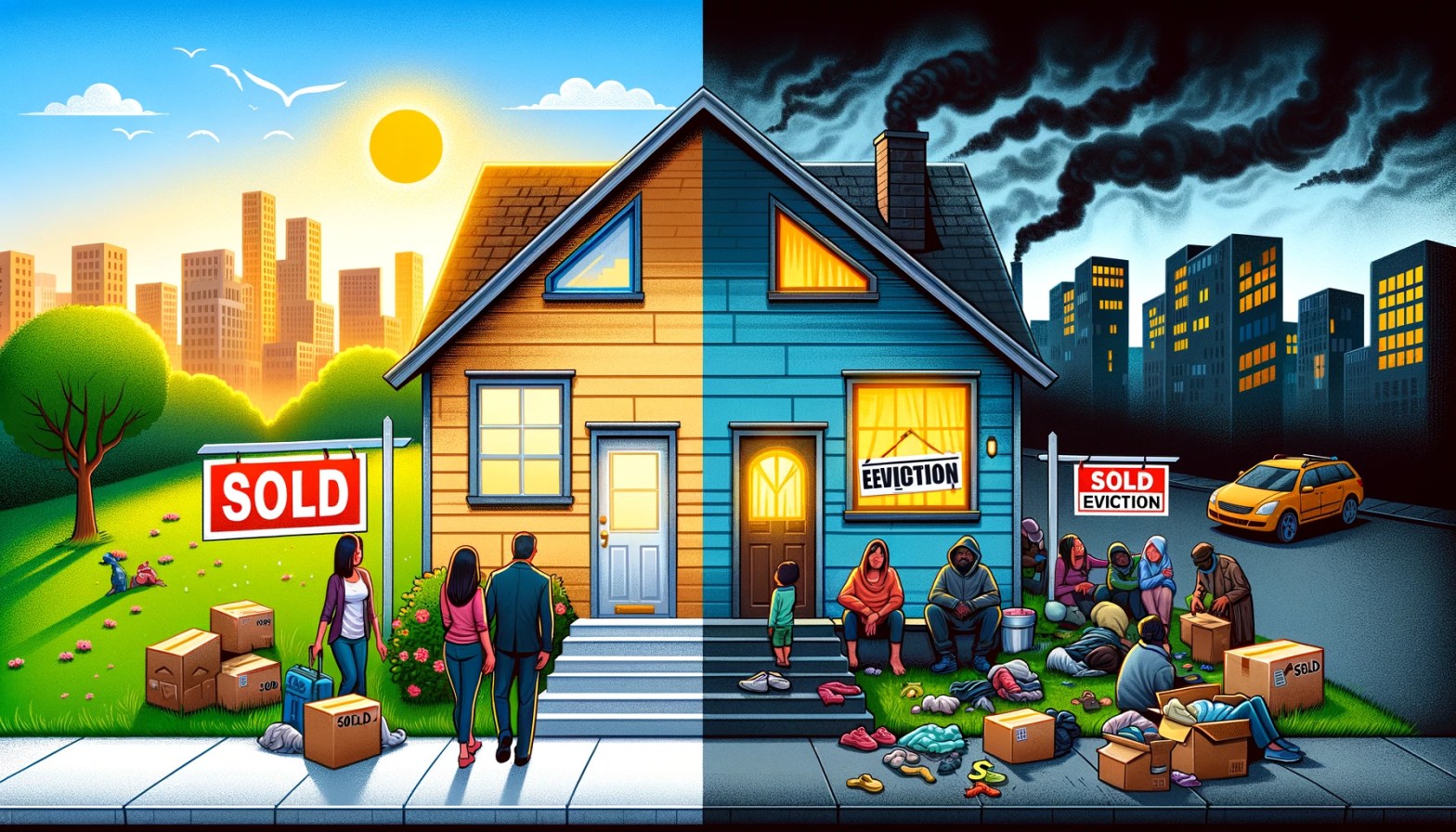
As we move into 2025, two seemingly contradictory trends are emerging in the U.S. housing market: the expected increase in home sales, and a worrying spike in evictions. These phenomena highlight the complex dynamics of the housing sector and reveal the widening gap between homeowners and renters.
The Expected Rise in Home Sales
According to Zillow’s recent forecast, the housing market is set to bounce back in 2025 after a period of stagnation. Declining mortgage rates and stabilizing economic conditions are expected to bring more buyers into the market.
Driving Factors:
Lower mortgage rates make borrowing more affordable.
Pent-up demand from buyers who were priced out during recent economic turbulence.
Increased inventory as sellers regain confidence in the market.
Who Benefits:
This trend will primarily benefit middle- to high-income buyers who can secure financing and take advantage of favorable interest rates.
Spike in Evictions
In stark contrast, eviction rates are surging, particularly in public housing projects like New York City’s NYCHA PACT properties. A report from NYC Newswire highlights alarming statistics showing tenants being displaced at record rates.
Driving Factors:
Rising rents in many metropolitan areas.
Economic strain on renters who are disproportionately affected by inflation and stagnant wages.
Aggressive property management practices, particularly in privatized public housing.
Who Suffers:
The hardest-hit are low-income families, seniors, and single-parent households who rely on affordable housing to survive.
Contrasting Impacts
The divergence between these two trends underscores the stark economic inequality in the housing market. While homeowners and prospective buyers might see opportunity in falling mortgage rates, renters face increasing instability and displacement.
What This Means for the Future
1. Policy Implications:
Policymakers will need to address these divergent realities. Measures like rent control, increased affordable housing, and stricter eviction regulations are critical to preventing further displacement. Simultaneously, policies that make homeownership more accessible to first-time buyers are essential for sustainable growth.
2. Social Consequences:
Without intervention, these trends could exacerbate societal divides, creating a growing class of homeowners while leaving renters in precarious situations.
A Call for Balance
The housing market’s health cannot be measured solely by rising home sales; it must also account for the security of renters. As 2025 approaches, striking a balance between encouraging homeownership and protecting renters will be vital to ensure an equitable and thriving housing sector.
By addressing these issues head-on, stakeholders can work toward a future where housing is not a privilege but a right for all.

FREE Limited-Time WEB CLASS Discover How to Earn $1,000 – $3,000 Per Day
On Complete Autopilot in 2025! 🚀
🎉 What You’ll Learn:
✅ How to create passive income streams with ZERO tech skills.
✅ Proven methods for success—no expensive tools required!
✅ Step-by-step strategies to start making money TODAY!
📅 100% Free – Next Class Starting Soon!
Discover more from ANSTAR HOME SOLUTIONS
Subscribe to get the latest posts sent to your email.
 ANSTAR HOME SOLUTIONS
1 Comment